How We Got Here
Freight has always needed matching. A shipper with a load in Cincinnati needs to find a carrier with a truck in Cincinnati. For most of the twentieth century, that match happened through phone calls, relationships, and physical load boards at truck stops.
The rise of digital load boards in the 1990s and early 2000s changed the volume and speed of matching. Brokers plugged into those boards and built businesses around their ability to find capacity fast. For shippers without established carrier relationships and for carriers without consistent freight, the broker filled a real gap.
But the technology has continued to evolve, and the gap the broker was filling has narrowed considerably. Carriers now have smartphones, verified digital identities, and access to real-time load data. Shippers have better tools to assess carrier safety records, on-time performance, and capacity. The information asymmetry that made brokers indispensable is not what it was.
What the Numbers Say About the Current Model
The US freight brokerage market was valued at approximately $19 billion in 2025, according to estimates from Research and Markets and Market Data Forecast, with projections pointing toward $29 billion by 2030. That is a large number, and it reflects how deeply intermediated the market has become.
Here is the practical reality behind that number. A shipper pays $2,000 to move a full truckload. The broker takes $240 to $400 of that before passing the rest to the carrier. The carrier does the work. The broker did the matching. Whether that matching justifies $240 to $400 on every move is the question the industry is now reckoning with.
Freight broker gross margins typically range from 10 to 35 percent, with an average around 15 to 16 percent based on Transportation Intermediaries Association data. As of mid-2025, van broker margins were running at roughly 13 percent and reefer margins at around 12.5 percent, per Circle Logistics market reporting. These numbers shift with market conditions, but the structural reality does not: every load moving through a broker carries a built-in cost that neither the carrier nor the shipper controls.
This is what the Stop the Broker Tax conversation is actually about. Not eliminating brokers as a category. Not pretending they never served a purpose. It is about whether that intermediary fee is justified by the value delivered, and whether the technology now exists to give carriers and shippers a better option.
The answer is increasingly yes.
What Carriers Are Dealing With
For a carrier, the broker relationship has always been transactional by design. The broker's incentive is to buy low from the carrier and sell high to the shipper. Transparency about what the shipper actually paid has been largely absent. Carriers have often operated with limited visibility into the margin their broker was making on any given load.
That is starting to change. The FMCSA has been working toward updated broker transparency rules that would guarantee carriers access to transaction data after delivery, without requiring a written request, and require brokers to retain and provide shipper rate documentation upon request. Industry reporting as of 2025 suggests these rules could take effect in late 2025 or early 2026, though the exact timeline remains subject to the rulemaking process. (Note: the final rule has not yet been published in the Federal Register as of this writing; the timeline and specifics reflect industry reporting from Bobtail and FreightWaves, not confirmed regulatory text.)
The transparency rules signal something important: the status quo of information asymmetry is not being defended. Regulators are acknowledging that carriers have a legitimate interest in knowing what shippers paid.
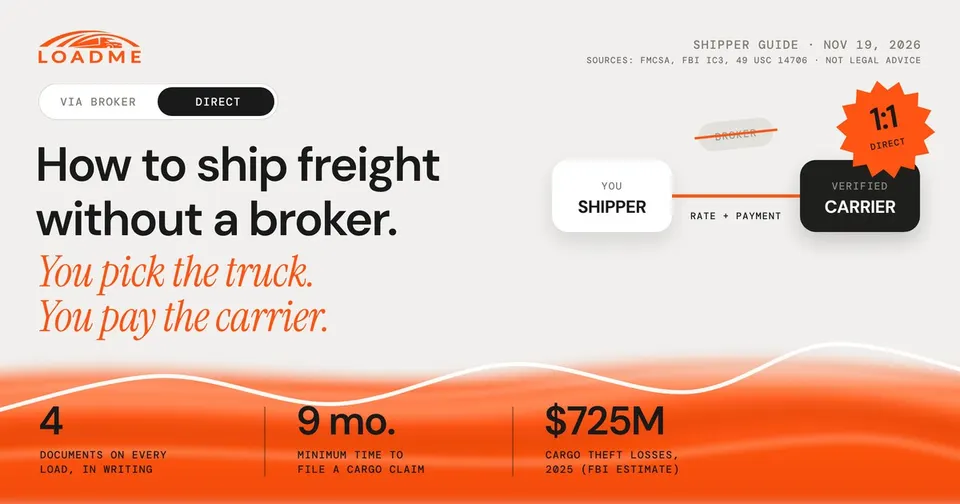
A direct freight network goes further. When a carrier connects directly with a shipper, there is no spread to hide. The rate is the rate. Both parties know it. The carrier keeps it.
Beyond the per-load economics, direct relationships also give carriers something brokers structurally cannot provide: consistency. A carrier with two or three reliable direct-shipper relationships on their core lanes is operating a different kind of business than one that wakes up every morning hunting spot loads through load boards.
What Shippers Are Dealing With
From the shipper side, the broker model has offered convenience and flexibility, especially for companies without dedicated transportation teams or with variable freight volumes. The broker handles carrier vetting, compliance checks, and capacity sourcing. That is a real service.
But the model has costs that go beyond the margin on each load.
When a shipper uses a broker, they lose direct visibility into who is actually moving their freight. They get a carrier name, maybe a truck number. They do not have an ongoing relationship with that carrier, no history, no performance record specific to their lanes, and limited recourse if something goes sideways.
Capacity access is also a function of relationships. When the market tightens, shippers with strong direct carrier relationships get trucks. Shippers who have been entirely reliant on brokers often find that capacity goes to someone else at a higher rate. Direct connections are a hedge against volatility.
A shipper moving three or more loads per week on a given lane has the volume to make direct relationships work. At that level, the brokerage margin is not the cost of doing business. It is an avoidable cost.
Why the Timing Is Right
Three things are converging right now that make direct freight networks viable at scale in a way they were not ten years ago.
The first is verified digital identity. Carrier fraud and identity theft have been documented problems in the industry for years. The barrier to going direct has partly been the due diligence burden: how does a shipper know the carrier is legitimate, properly licensed, and insured? Digital verification systems, drawing on FMCSA registration data and third-party compliance tools, now make it possible to vet a carrier in minutes rather than days.
The second is mobile technology. Owner-operators and small fleet carriers, who make up the majority of the US trucking industry by count, now have the same access to load data, navigation tools, and communication platforms that large carriers have always had. The technology gap that once favored large brokers with proprietary systems has largely closed.
The third is regulatory direction. The FMCSA's broker transparency push, increased scrutiny of double-brokering, and ongoing work around carrier identity verification are all moving in the same direction: a market where both sides of a freight transaction have better information and better tools. Direct freight networks are the natural destination of that trajectory.
The Bigger Picture
The freight industry is not going to look the same in ten years as it does today. That is not speculation. The market size projections, the regulatory direction, and the technology adoption curve all point toward a more connected, more transparent market.
The question is not whether direct freight networks become a significant part of the logistics landscape. The question is which carriers and shippers position themselves early and build the relationships and tools that let them operate in that model.
For carriers, that means understanding what your lanes are worth without a middleman taking a cut. For shippers, that means knowing who is moving your freight, building relationships with the carriers who perform, and reducing the structural costs that sit between you and your capacity.
Direct connections do not require abandoning everything the existing market offers. They require a clear-eyed view of what the intermediary model costs and a willingness to build something more durable.
LoadMe is a direct freight network connecting shippers and carriers without intermediaries. Carriers keep more of what they earn. Shippers pay for freight, not for the layer between them and it. If you want to see how it works, visit loadmeboard.com.